How to Choose a Clutch
Here at K Series Parts we are commonly asked: What is the best clutch and flywheel for my car? In a market with so many clutch and flywheel options most consumers are left wondering what’s right for them. In order to choose the optimum set-up for your car the first questions you’ll need to ask yourself are: how much power am I making, and what will I be using the clutch for? These questions will always help narrow down what type of clutch to select for your car. Clutch manufacturers generally offer clutches as stage one to stage five, with some offering original equipment manufacturer (OEM) replacements, and many offering twin disc applications for racing.
-
Stage 1
If you’re making up to 50whp over stock, you should be looking at stage one clutches which generally hold a 25-50% increase in torque capacity. The stage one clutches generally offer a slightly increased clamp load from the pressure plate and organic disc which will provide a similar stock pedal feel and engagement. Organics discs are generally made of fiberglass which offer high mileage and durability for daily driving, and generally require a 300 to 500-mile break-in period (please always follow manufacturer suggested break-in period). These are the best and most popular option for people with basic engine modifications such as: intake, race header, exhaust, and reprogrammed ECU.
-
Stage 2
When to select a stage two clutch? The primary differences with a stage two clutch have to do with the type of disc offered; but typically the pressure plate clamp load is the same for stages one through five. A carbon-kevlar disc is considered an upgraded disc, and is generally offered in all stage two clutch kits; these provide, roughly a 50-75% increase in torque capacity. This disc requires a very strict break-in period, which can determine how long the clutch will last while installed. The kevlar material is much more durable than an organic disc, but is more prone to glazing caused by heat. Slipping the clutch excessively is something that is not recommend during the break-in, nor after. The kevlar material will naturally glaze when it heats up to a point, but will return to its normal state once cooled down. So it is important to remember not to constantly abuse the clutch disc which can “cook” the disc, thereby destroying it and potentially causing clutch failure. This type of clutch should be selected when you have more than all-motor modifications such as: cams, pistons, small shots of nitrous. A Stage two clutch is also recommended for supercharged applications making under 300whp.
-
Stage 3
K series applications don’t have many options when it comes to a clutch due to the type of disc that is used. The brands that do offer a stage 3 clutch are: Clutchmaster, and Action clutch. These discs are composed of a Kevlar material which offers an even higher increase in torque capacity than carbon-kevlar can. These disc require an extremely strict break in period to ensure you get the full life out of the clutch. The torque capacity is generally 75-125% increased over stock, applications that this type of clutch would be used in are advanced all motor builds that are still street driven. Supercharged and turbocharged setups making sub 350whp could also select this type of clutch for daily driving.
-
Stage 4
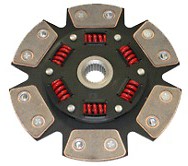
At the top end of single disc clutches are the and stage five. These clutches usually offer 6-puck cerametallic sprung/unsprung discs in a stage four and 4-puck cerametallic sprung/unsprung discs in a stage 5. Cerametallic clutch discs offer sharp engagement that aren’t meant to be slipped more than needed because it will wear down the surface of the flywheel, pressure plate, and clutch disc faster than intended. The torsion springs in discs that include them dampen the shock to the drivetrain when engaging the clutch, it is recommended for street applications to always use a sprung disc. The Competition Clutch stage four clutch has been the benchmark for higher horsepower turbocharged and supercharged applications for the K-series motor because of price and drivability. We recommend going with this level of clutch when in the 400-500whp range although we have tested it to hold even more horsepower.
-
Flywheels
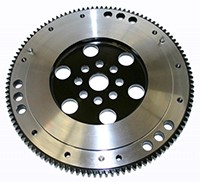
The final step in deciding your clutch and flywheel set-up is what type of flywheel to run with the different clutches. Let’s start by discussing the weight of the stock RSX Type S flywheel, it is approximately 16 pounds. There’s only one reason stock flywheels are heavy, and that’s because car engineers design them to be that way. Car manufacturers want manual transmission vehicles to have a consistent and easy driving feel when stock. Increasing performance of an engine by lightening or reducing rotating mass is a relatively simple process, but there are trade-offs. Aftermarket clutch manufacturers usually produce two types of flywheels: lightweight and ultra lightweight. The lightweight flywheels produced for the K series come in at a modest 11.5 pounds which frees up approximately 4.5 pounds and adds a little bit of top end horsepower but still maintains the lower end drivability. This is our most highly recommend flywheel weight because it doesn’t completely sacrifice the comfort of a stock weight flywheel but allows for better engine response and top end horse power. The ultra-lightweight flywheels come in at 8 pounds and are made by a few manufacturers, these are approximately half of the weight of a stock flywheel. You will notice increase engine response and a moderate horsepower gain on the top end. With so much reduced weight in the clutch assembly drivability in stop and go traffic becomes an issue. The reduced mass requires more rpm to get the car moving as the clutch drags on the flywheel harder, because of the reduced weight. Another side effect of a lighter flywheel is commonly referred to as clutch chatter. It’s a sharp vibration in the clutch assembly that transfers as noise through the chassis and feels like something is vibrating loose. Clutch chatter can also be caused by increased pressure plate clamp loads and clutch discs used in the clutch kits, and is not always a result of the flywheel you have selected.
-
Twin and Triple Disc Clutches
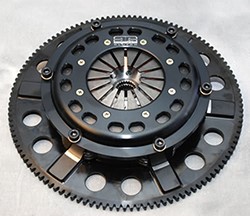
Our journey ends with twin discs as the track racers and high horsepower engines need something to control all that power to the ground. Most manufacturers rate these assemblies from a capacity of 500-800 ft/lbs of torque. Twin discs always come with their own custom flywheel due to the change in pressure plate design. All clutch manufacturers use cerametallic discs with their assemblies for maximum gripping power. We wouldn’t recommend you daily drive this type of clutch unless you’re a die-hard auto enthusiast who is willing to sacrifice comfort and are making beyond 500whp.
We at K Series Parts hope we have shed some light on the many questions surrounding clutches and flywheels. If you have an advanced technical question or feel you would like more guidance regarding what clutch and flywheel to select, please, give us a call and speak to our sales representatives! It is our pleasure to assist you with your build! Thanks for reading and keep your eyes peeled for our future tech articles and happy burnouts with your new clutch!